Identify & Rectify the Moisture Source
Fix external issues first—repair leaking pipe joints, service sweating aircon trunking, or address inter-floor ceiling water seepage from the flat above.
WALL ASSESSMENT & REPAIRS GUIDE
Black spots and fuzzy green patches on bathroom ceilings, bedroom walls, or around aircon ledges are major headaches for Singapore homeowners. While applying a fresh coat of anti-mould paint seems like a quick solution, painting directly over active fungal spores without solving the root moisture cause guarantees the mould will bleed through in a few short months.
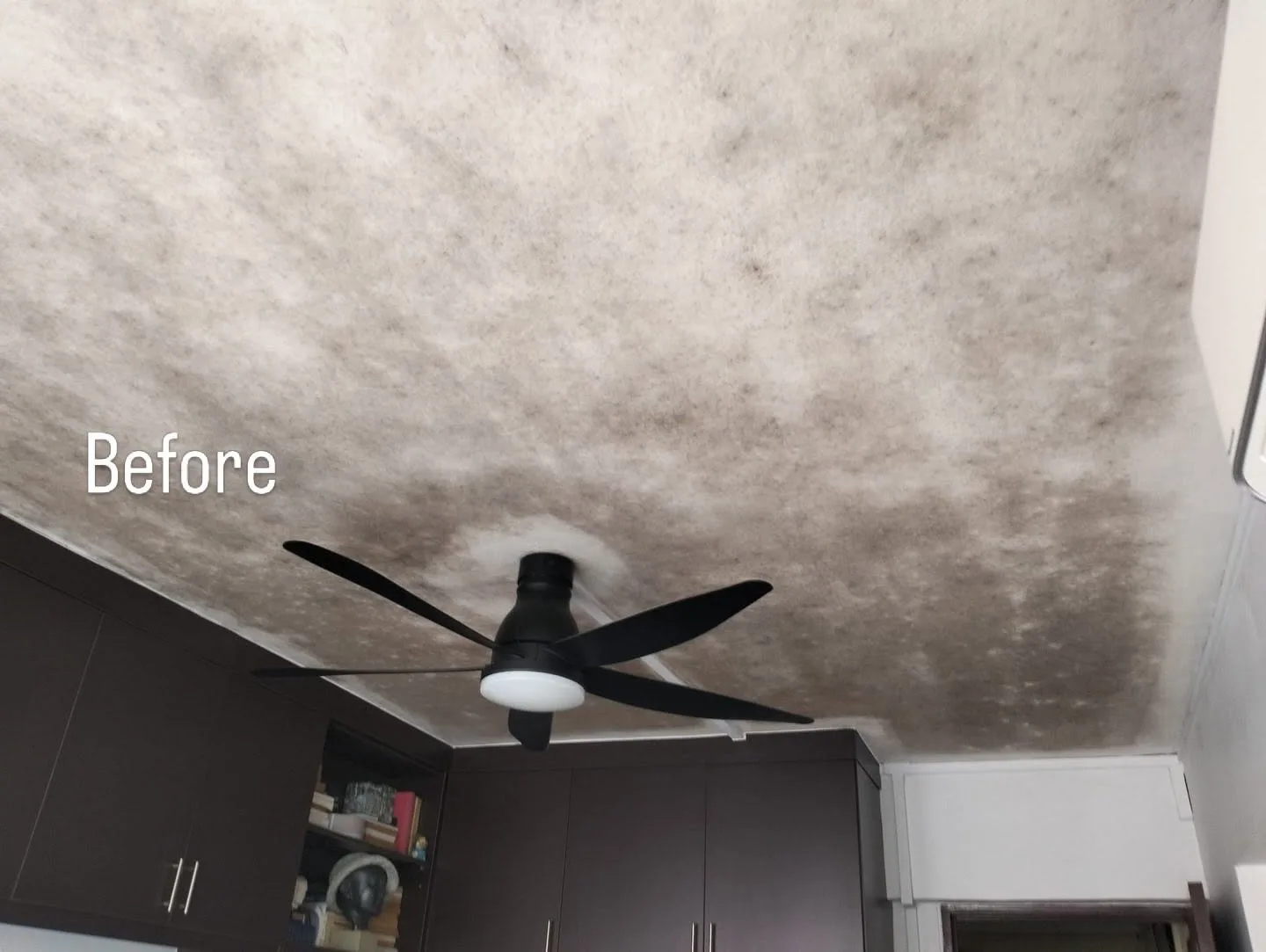
Mould is a living organism, not just a surface stain. Slapping paint over active spores creates several ongoing problems:
Standard emulsion paint does not kill mould spores. Moisture trapped under fresh paint allows spores to feed on organic plaster compounds and grow back outward.
Fungal colonies weaken the bonding strength between plaster and topcoats, causing the fresh paint to bubble, peel, or flake off in sheets.
If the mould stems from inter-floor seepage, concealed pipe leaks, or aircon condensation, new paint will quickly discolor and fail under continuous dampness.
Unaddressed mould spores continue releasing microscopic allergens and toxins into your home, impacting family members with sinus issues or asthma.
To eliminate fungal growth permanently before opening a can of paint, follow this comprehensive remediation procedure:
Fix external issues first—repair leaking pipe joints, service sweating aircon trunking, or address inter-floor ceiling water seepage from the flat above.
Scrape off loose plaster and sterilize the surface using a dedicated anti-mould wash or bleach solution. This penetrates the porous substrate to kill root spores.
Apply an anti-alkali sealer or oil-based primer block. This creates a waterproof barrier that locks in faint residue stains and prevents latent dampness from rising.
Apply two coats of premium interior anti-mould paint (e.g., Nippon Vinilex 5000 or Dulux Wash & Wear Anti-Bacterial) designed with active micro-biocides.
Send us a WhatsApp photo of your affected walls or ceilings. Our team can evaluate whether your home needs chemical treatment, specialized priming, or leak diagnosis.
Send mould photos on WhatsApp ↗